Session Intention Reflection
A Reflective Exercise for Preparing a Circle Session by Michael Basil
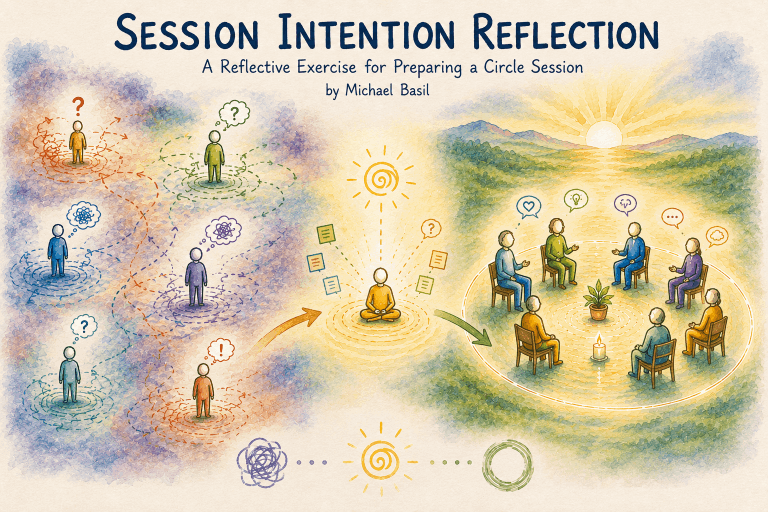
This reflection helps you prepare a Circle session by identifying what is becoming important in a group and shaping the conditions for a meaningful conversation around it.
In complex situations, people often enter the same conversation with different assumptions, priorities, concerns, and levels of readiness.
Progress rarely begins with immediate agreement.
More often, it begins when people can better see:
- what matters
- where tensions exist
- what others are noticing
- and what the group may be ready to engage together
A Circle session helps create the conditions for that kind of shared awareness.
Framing
Grounding lenses
Before beginning, it can help to revisit two related reflections:
- Sense Making Reflection → how people may be interpreting the situation differently
- Energy Awareness Reflection → how people may be showing up in relation to the situation
Together, these lenses help reveal how the conversation may need to be held.
The exercise
Take a moment to settle your attention before beginning.
Use a simple mindfulness or grounding practice to slow down and become present.
- Suggested exercise: One Breath
Allow your attention to move from immediate problem-solving into broader awareness of the people, relationships, and dynamics involved.
1. What is becoming important right now?
What feels increasingly important, unresolved, or difficult to ignore?
Where do you sense genuine interest, concern, energy, or readiness to engage?
2. How are people interpreting and responding to the situation?
Using the Sense Making Reflection, where are perspectives aligned or diverging?
Using the Energy Awareness Reflection, what energies are most present? What may be missing?
How might these dynamics shape the conversation?
3. What questions could help open the conversation well?
What question—or small set of questions—could help people ground together while remaining open to discovery?
Strong questions often:
- invite curiosity rather than defensiveness
- keep multiple perspectives visible
- support shared attention
- avoid forcing premature conclusions
4. How should people arrive into the conversation?
What conditions will help the conversation become productive rather than reactive?
Consider:
- the level of listening required
- emotional or relational sensitivity
- grounding or arrival practices
- structures that can help tension become useful rather than divisive
5. If people want to go deeper, what support should be available?
If strong interest or readiness emerges, what additional support may help?
This might include:
- breakout conversations
- facilitators or subject-matter support
- smaller working groups
- reflection or integration practices
- pathways for continued exploration
6. How will the session move toward meaningful next steps?
If the group begins developing greater clarity or alignment, how will that momentum be carried forward?
What would help the session conclude in a way that supports both individual and collective next steps?
Reflection
As you look across what you’ve named, notice what picture is beginning to form.
You may begin to see:
- what the group is ready to explore
- where tensions or opportunities are concentrated
- what conditions may help the conversation become productive
- and what kinds of support may help shared understanding develop
Rather than trying to control the conversation, this reflection helps you prepare to guide it with greater clarity, responsiveness, and care.
Sharing
Before the session, consider sharing your emerging framing with 1–2 trusted people.
Additional perspectives can help reveal:
- blind spots
- missing tensions
- overlooked readiness
- opportunities for stronger alignment
This can help strengthen both the intention of the session and the conditions being created for the group.
Continue exploring
If you’d like to go further with this work or explore additional dimensions, you’re welcome to connect.